Planned Cesarean Birth: What to Expect & How a Doula Can Support You
Planned cesarean births can feel emotionally complex. Frequently this was not what parents envisioned when they imagined the birth of their child. And if it is what they envisioned, there is often a meaningful reason why.

mother holding her baby during her cesarean birth
The most common misconception about cesarean birth is that it’s the “easy” way out.
Having major abdominal surgery while fully conscious is not easy.
Having a baby is not easy.
Becoming responsible for caring for a newborn as you recover from a cesarean is not easy.
I wish more people understood that just because you don’t have to endure hours of labor, feel the intensity of contractions, persevere through pushing does not mean that you had your baby the easy way. And having intentional support through a cesarean delivery is just as essential.
Feeling prepared for your cesarean birth can help you feel more at ease, because you will know what to expect, understand your options and feel seen and held throughout. This is one of the many ways a doula can support you through the experience.
When our clients hire doulas to support them through their cesarean, that means that…
their voice will be heard,
their wishes will be protected
their autonomy will be preserved
…even in an OR setting.
There are limits to what is permitted in a surgical setting. Your doula can help you feel seen, heard, and supported throughout your experience.
Before You Arrive at the Hospital
Doctors typically have instructions for their patients before surgery. These instructions can change depending on which provider you have or which hospital you deliver at. They often include, but are not limited to:
No food after midnight the night before surgery
Arrive at the hospital several hours before scheduled surgery
Showering with an antibacterial soap
Avoiding certain medications
Flexibility is often important on delivery day, because your surgery, while important, can sometimes get pushed back on the schedule. If the labor and delivery department had a busy night or had an emergency, your OR might be occupied, and waiting for your moment can take time.
Knowing that delays are possible can make them feel less upsetting if they happen. It doesn't mean you have to like the wait. It simply means you won't be blindsided by it. Bringing a favorite activity to do with your partner can help ease tension and pass the time. I’ve seen clients;
Play card games, board games
Video games
Watch TV shows, movies
Look through photo albums (wedding albums are popular)
FaceTime with family or friends who will help relax you
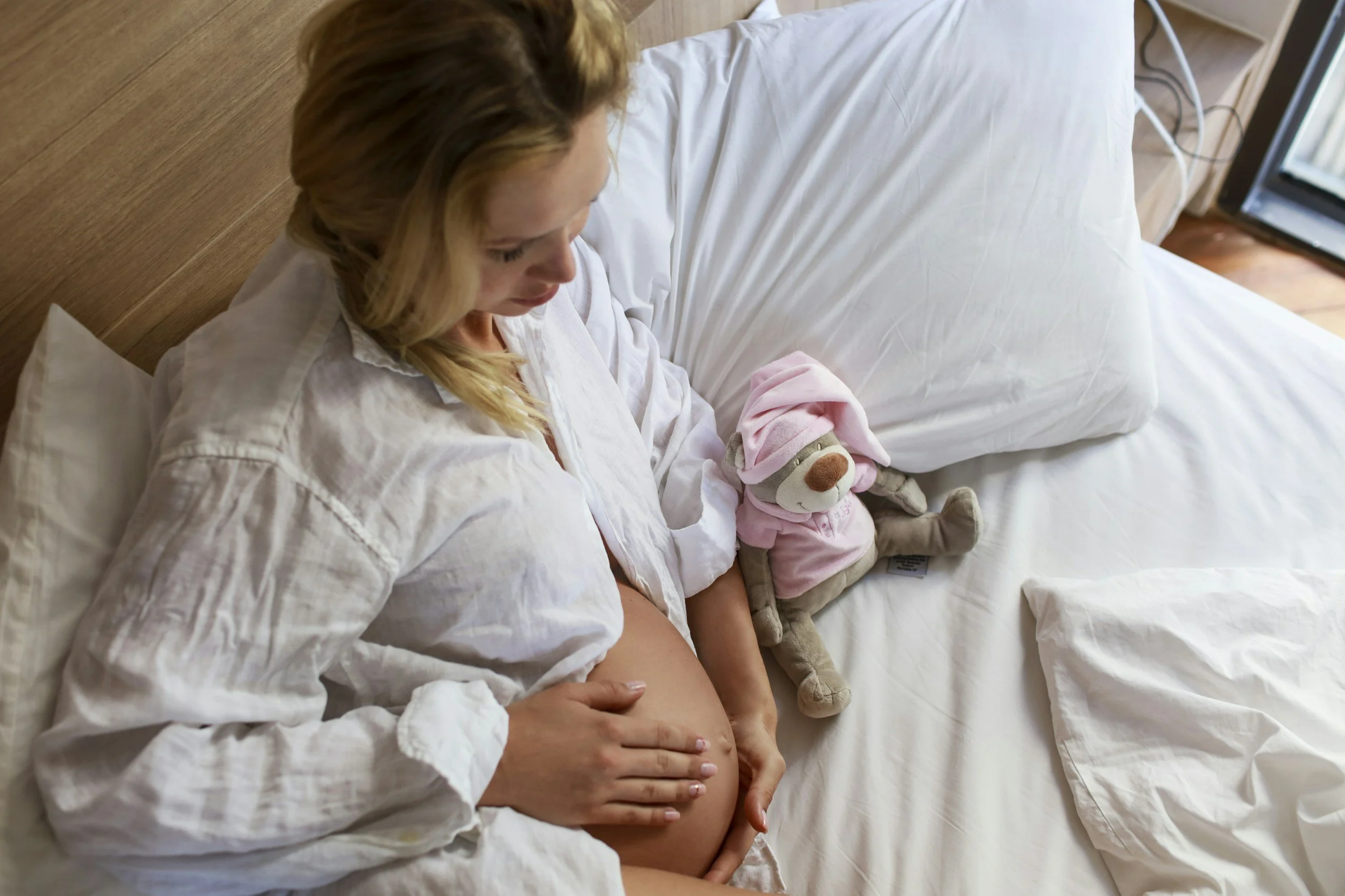
preparing on the morning of her cesarean
Other practical things to help the morning feel calmer;
Pack your bags far ahead of time
Have a checklist to make sure you have everything you need
Get carseat installation checked in advance
Practice grounding techniques that you can also use during surgery (deep rhythmic breathing, progressive muscle relaxation, scents that bring you peace and calm)
Make sure to share your birth preferences with your provider ahead of time
Wear comfortable cozy clothing
What Happens When You Arrive
The admission process can also vary from hospital to hospital, but it usually includes;
Going over patient history and medications list
Reviewing risks and consent forms
Reviewing birth plan
Checking in with providers who will be present during surgery (OB, anesthesiologist, surgical nurse, NICU or Special Care teams)
Monitoring of baby and birth parent
IV port and administration of fluids of medications
Bloodwork/labs
Throughout this admission process it is common to feel detached, excited, anxious or nervous, numb, scared, relieved to finally be here. There is no right way to feel before your cesarean birth. I've seen clients feel excited, terrified, relieved, detached, grateful, disappointed, and everything in between. Sometimes all at the same time!
Your doula should
check in with you the night before your birth
arrive at the hospital with you on the morning-of
be by your side through the pre-op prep and admission process
be available to answer any questions you may have.
They should help you create cesarean birth preferences, so that your autonomy and wishes can be honored.
Doulas also help your birth partner by preparing them for what to expect and education on how they can support throughout the process.
Birth partners have such an important role in supporting a scheduled cesarean. They will be navigating logistics, because often the birth parent has so much on their mind. Support partners will be doing a lot of heavy lifting, literally, as their partner recovers from their surgery. That means newborn care, surgery recovery support, feeding support, sometimes driving and often carrying baby are big factors.
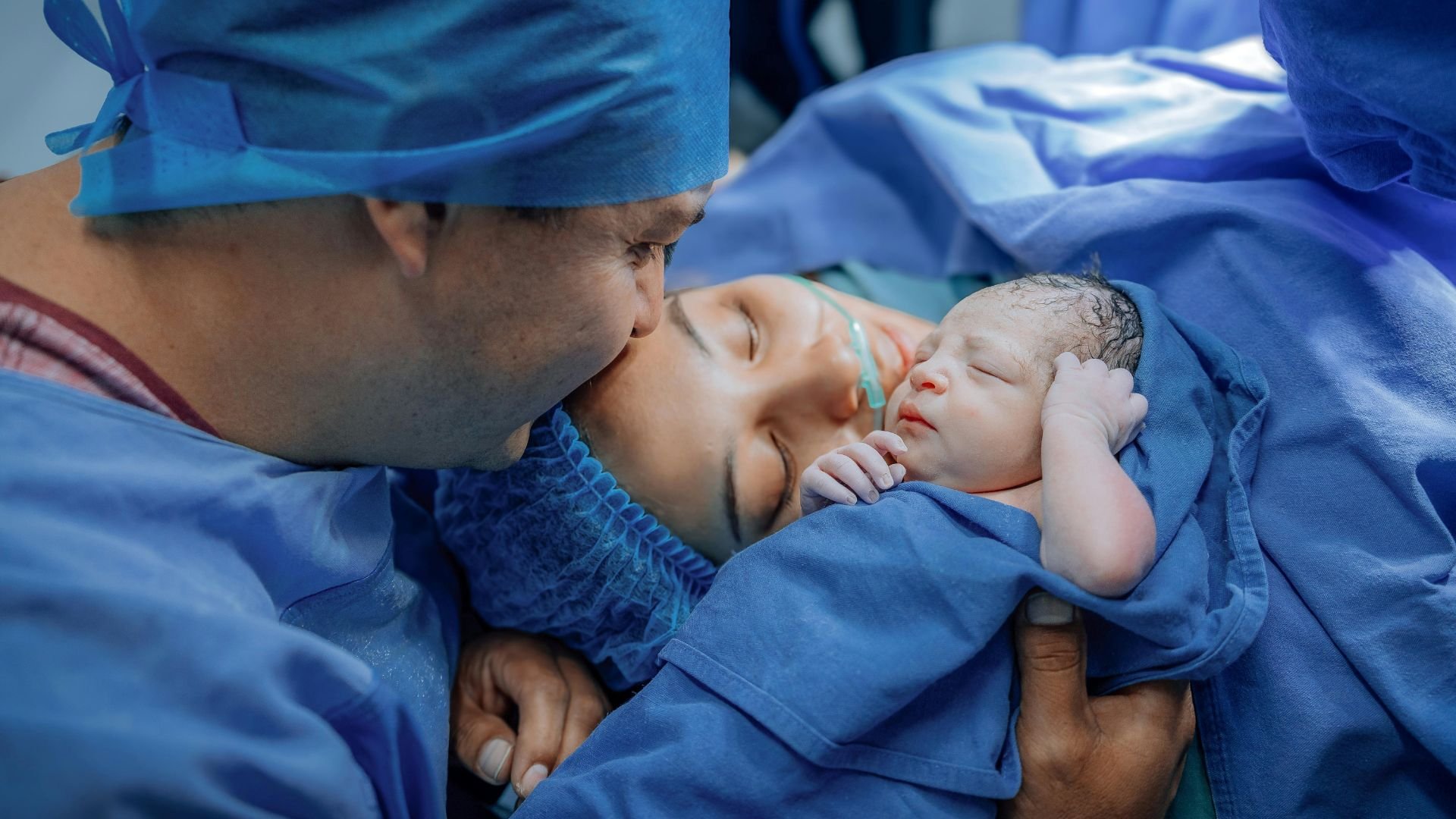
partner support during cesarean birth
How a Doula Supports During a Planned Cesarean
Before a planned cesarean there are a lot of important ways that your doula can help you prepare and support you through the process.
Prenatal visits to discuss what to expect
Explaining your comfort measure options
Listening to your preferences and creating a personalized birth plan
Reviewing and trying different comfort measures to help ground you
Discussing and preparing for the recovery process
Partner education and support
One of the most valuable things a doula can offer before a planned cesarean is helping you feel less alone in the process. Often that involves information and education about what to expect.
What comfort measures are still available in an OR setting? How can your partner be involved? What does the process actually look like? What can you expect during recovery?
Your doula should be able to paint a picture for you of what you can expect. This usually helps demystify the experience and puts parent’s minds at ease.
Just because you're having surgery doesn't mean your comfort is irrelevant. Before even getting to the OR many people feel nervous, excited, anxious or disbelief that the day is finally here when they will meet their baby.
Comfort measures that are helpful while at the hospital in pre-op are:
Breathwork, solo or with a partner/support person
Meditation, visualization, progressive muscle relaxation
Listening to music
Warm or cool compresses
Massage, hair brushing, grounding touch
Conversations about baby, what you look forward to as a parent, the road it took to get to this day
Feeling connected to your preferences and voice throughout the cesarean process starts in the pre-op room.
Making sure your birth preferences align with the protocols and practices of the hospital and your providers is where it all starts.
his is how you will be able to start a conversation about how you envision your birth, and what experiences of your birth are near to your heart. This matters. It is a crucial part of what can make a cesarean birth experience feel fulfilling.
Emotional attunement can look as simple as noticing when the birthing person seems overwhelmed and asking for space. Clarifying information from providers. Responding to unmet and sometimes unspoken needs. Help with processing the reality of their birth experience.
If Your Doula Is Allowed in the Operating Room
Inside the OR the environment can often feel sterile (and it literally is). So bringing comfort items when possible can make a big difference (headphones, eye mask, stress ball).
Clients are often surprised by how cold the OR is. Asking for a blanket from the warmer can help with this. Or even requesting that IV fluids be warmed is sometimes an option.
During the surgery your doula can offer grounding touch such as
hand holding
face and scalp massage
pressure on shoulders
heating pads
Conversation can also offer grounding through this intense experience. Discussing what your baby might be like, which parent they might resemble, how their nursery is set up, and what you are looking forward to can bring peace and a sense of control.
Intentional connection can still be cultivated during a cesarean birth. Some hospitals are able to offer a clear drape so that you are able to see your baby immediately after delivery. Often, your birth partner is able to do a ceremonial umbilical cord cutting at the baby warmer in the OR. There is typically still opportunity for skin-to-skin, whether that be cheek to cheek or with baby on upper chest.
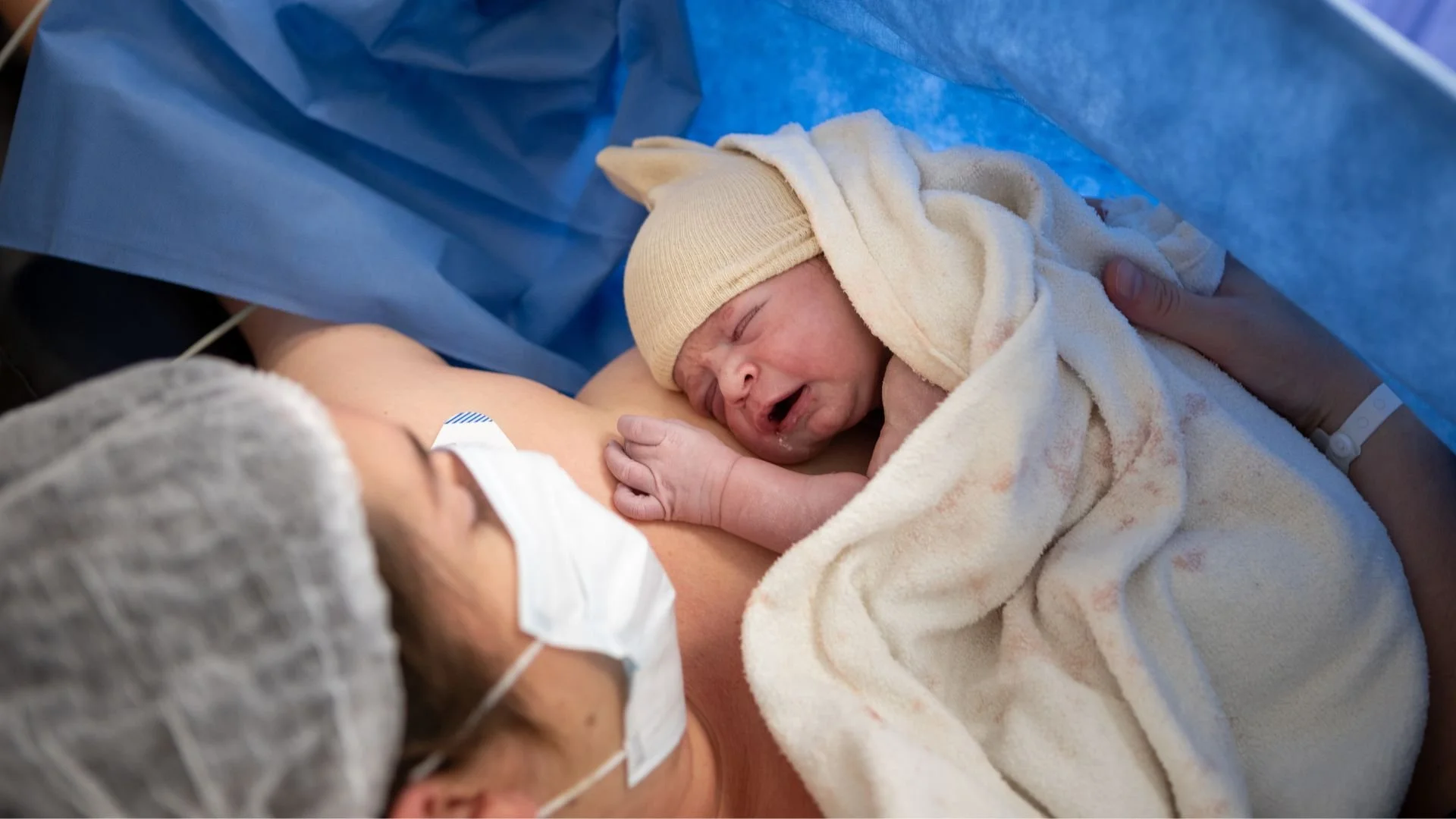
Newborn cesarean baby
The OR is an environment that can be unfamiliar for clients. Here is what they can expect to experience physically:
The OR is typically quite cold (because it is a sterile environment)
The room is very bright, so that your surgeon can see what they are doing
You won’t be able to see beyond the surgical drape, which is set up below the nipple line
Anesthesia will be on your side of the surgical drape with your support person
Your anesthesia medications will be administered before the surgery begins. Your anesthesiologist will perform checks to make sure that your surgical site is covered, and you will feel no pain. You will feel tugging sensations and pressure as the surgery unfolds.
Shaking and nausea are typical throughout the birth process. If you are feeling any pain, discomfort, nausea, anxiety you should communicate that with your anesthesiologist.
There will be a handful of staff members in the OR for delivery (typically your OB, assisting surgeon, anesthesiologist, scrub nurse, baby nurse, sometimes a NICU team or pediatric specialist). If you are delivering at a teaching hospital, there may be students present for your delivery. You have the option to ask for no students in the OR.
Your baby's APGAR score will be assessed at 1 and 5 minutes after birth to help the care team evaluate how they tolerated the birth and how they are transitioning to life outside the womb.
As long as your baby’s scores are good they will be brought to you for immediate postpartum bonding as allowed by OR policies.
If the Doula Is Not Allowed in the OR
Doula support can still be beneficial, even if your doula cannot accompany you in the operating room. In this case your doula will offer you continuous support in pre-op as well as post-op. They will still come to meet you at the hospital on the day of your surgery, and provide all the physical, emotional and educational support outlined above! While you are in surgery, your doula will wait for you, and be there for you once you come out.
This is where your birth plan and preferences will really shine. Your birth preferences will act as your guiding light in the OR when emotions are running high.
Birth partners can feel an intense sense of responsibility and even helplessness when they are the sole support person in the OR. It can be difficult to watch the person you love experience something so intense. Your doula will help prepare you with grounding practices for yourself, as well as tools to help your partner through the experience as it is happening. These practices should also be outlined on your birth preferences, to provide a guide through the intensity.
Immediately after surgery your doula will be waiting for you in recovery. They will welcome you out of surgery, and congratulate you on new parenthood!
We often want to hear about how the surgery went, how birth parent and baby are doing. This information will help us give you advice on how to approach recovery.
Baby-parent bonding is often a piece of the birth puzzle that cesarean parents are concerned about. Your doula will be able to help create space and opportunity for you to bond with your baby.
Doulas are often trained to be able to help with infant feeding. So if your plan is to breastfeed, your doula can facilitate the first latch.
Emotional support immediately after a cesarean birth looks like helping you process the experience, praising your strength and perseverance, cultivating your connection with your partner.
Similarly to your support before surgery, your support in recovery will consist of educational support about:
Postpartum recovery
Hospital procedures such as fundal massage, pain management, wound care, etc.
Common practice newborn procedures such as the vitamin K shot, Hepatitis B vaccine and erythromycin eye ointment
Infant feeding
Your doula support will feel continuous, even when we are not in the OR alongside you.
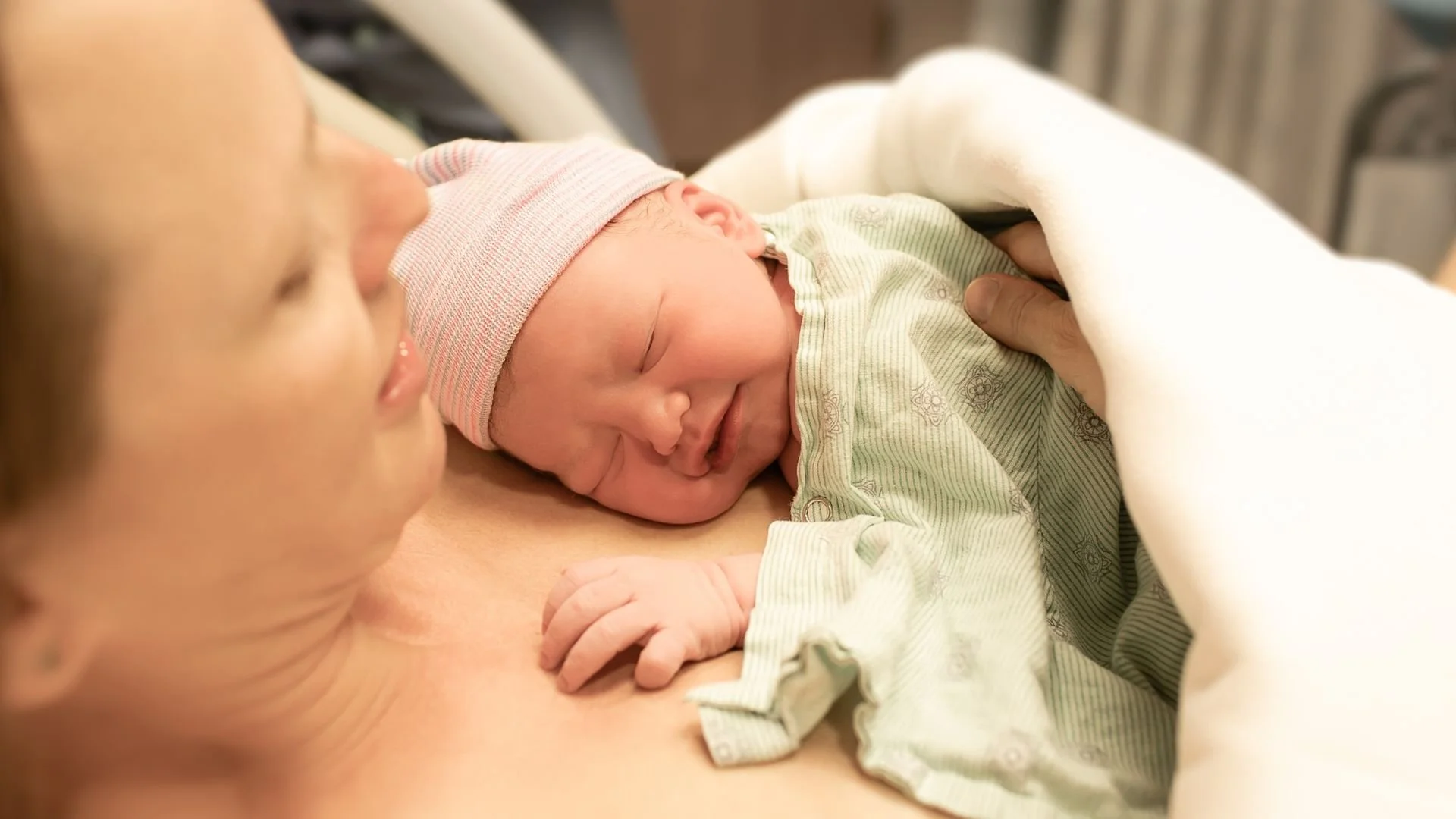
postpartum cesarean recovery
Recovery & The First Hours After Birth
Your recovery immediately after surgery will start slow.
You will slowly start moving your body, start to drink and eat slowly, start slowly building a bond with your baby. The medications from the surgery can sometimes make you drowsy, so taking things slow is for the sake of safety, as well as to honor your experience of early postpartum.
Physically you might still feel numb, you might feel sort of empty.
A lot of people experience normal swelling from the IV fluids given before and during surgery.
Your IV port will likely still be in your arm to administer medications, like pitocin, or antibiotics.
Some people feel sore and tender after surgery. After all, your body has just undergone a major abdominal procedure.
Nausea and shaking are common after surgery.
Your nurse will give you fundal massages regularly after surgery, where they will push down on your belly to assess the firmness of your uterus and any vaginal bleeding. They will regularly check your vitals, and examine your incision to see how you’re recovering. These assessments are all to ensure your health and safety during a very vulnerable time. The nurse will also remove your catheter, and assist you with your first movements in recovery.
One of the things I hear most often after a cesarean birth is, 'I can't believe my baby is here.' Some parents want to stare at their baby for hours. Others need a little time to process everything that just happened. Both experiences are normal. There can be feelings of disconnect, upset, elation, joy, relief, and a deep need for processing. All of those experiences are valid, and to be expected.
Your doula, along with your nurse can help facilitate bonding, movement, feeding, and communication in the immediate postpartum period.
Some things that I wish more people knew about postpartum recovery is that you are recovering from a major abdominal surgery. You are also freshly postpartum, and newly responsible for an infant. It is okay if healing takes time. It is okay if you need help. This is an unprecedented physical experience that is unique to cesarean birth. Your expectations for yourself can sometimes need a reality check.
Cesarean Birth Preferences Matter Too
One of the biggest misconceptions about cesarean birth is that because it is a surgery, there is no room for personal preferences.
While there are certainly limitations within a surgical environment, there are often still opportunities to personalize your birth experience and make choices that feel meaningful to you.
Birth preferences are not about controlling every outcome. They are about identifying what matters most to you and having conversations with your care team about what may be possible.
Some examples of cesarean birth preferences might include:
Playing music during surgery
Delayed cord clamping when medically appropriate
Requesting a clear drape for baby's birth
Immediate or early skin-to-skin contact
Partner involvement during key moments
Photography preferences
Feeding preferences and newborn care plans
Creating a calm and quiet environment when possible
Not every hospital offers every option, and not every preference will be feasible in every situation. That doesn't mean your preferences don't matter.
The process of thinking about your preferences, discussing them with your provider, and understanding your options can help you feel more informed and more connected to your birth experience.
Even in the operating room, your voice matters.
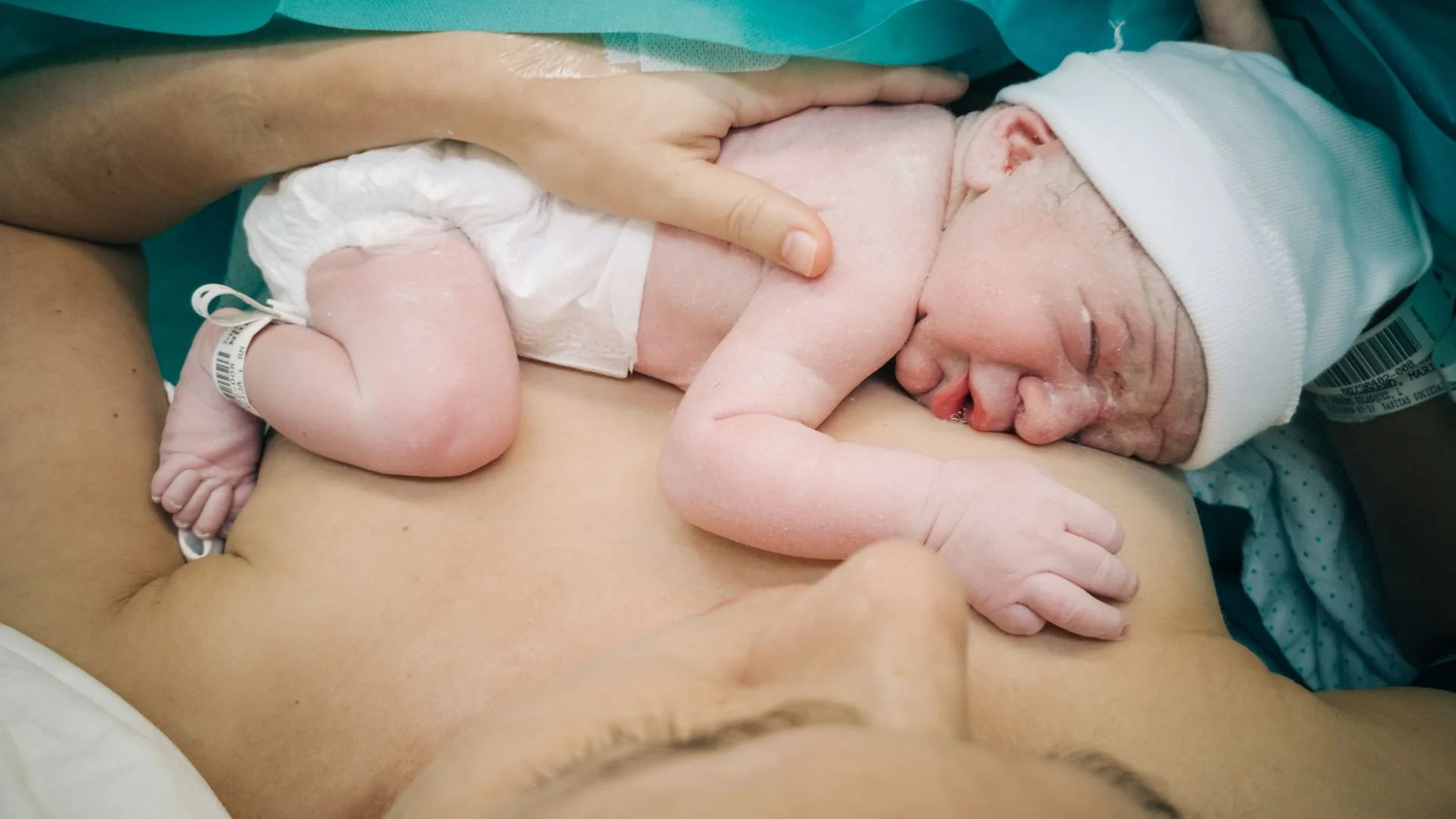
skin-to-skin in the OR
A Supported Birth Is Still a Supported Birth
If you're preparing for a planned cesarean birth, I want you to know this:
Your birth still belongs to you.
The way your baby enters the world does not determine the value of your experience, the strength it takes to become a parent, or the love felt in the room that day.
A cesarean birth may look different than you originally imagined. It may bring feelings of relief, excitement, grief, gratitude, fear, confidence, or all of those emotions at once. Whatever your experience looks like, you deserve support through it.
An empowering birth experience is not defined by whether labor happened, whether surgery was involved, or whether everything went according to plan.
An empowering birth experience is one where you feel informed, respected, supported, and connected to your own voice throughout the process.
Compassionate support means having people around you who help you understand your options, honor your preferences, answer your questions, and remind you that you are not alone.
You deserve support, information, and steady care no matter how your baby enters the world.
If you're preparing for a planned cesarean birth and would like personalized support, we at North Shore Doula Co. would be honored to walk alongside you through the experience.
Together, we can help you feel informed, prepared, and supported as you welcome your baby into the world.